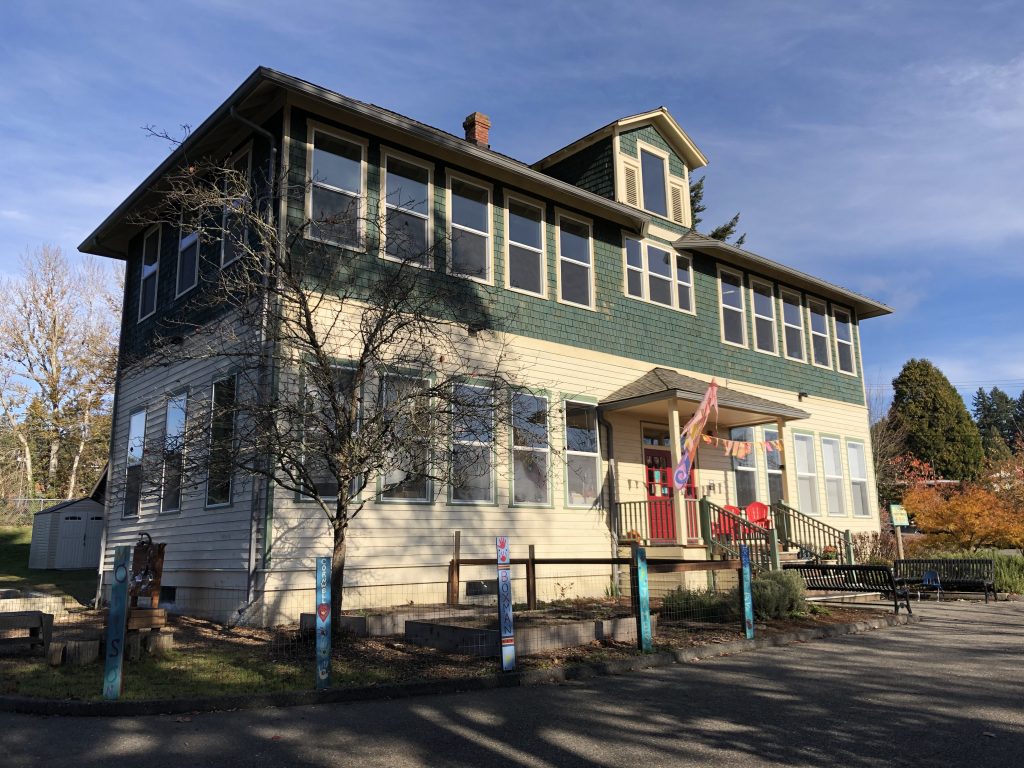
An open house and registration
for the 2008/2009 school year will be held on March
20th from 6-7 pm at the Kingston Coop Preschool.
All individuals interested in our preschool are
welcome and encouraged to attend.
Our Coop Philosophy
Research in the area of early
childhood education indicates that young children learn
best through play. In the process of exploring and
manipulating materials in their environment, they gain
an understanding of their world.
Programs that provide a wide variety of experiences appealing to all of their senses, appropriate to their age and developmental level, are the most valuable.
Young children are natural learners. Their curiosity and desire to make sense of their world lead to spontaneous, self-directed learning.
It is for these reasons that a large part of our school day is devoted to free play.
We plan experiences to involve the child's senses of sight, hearing, taste, touch and smell.
The more fully a child explores, senses and interacts with real objects, the more meaningful and long-lasting this learning will be.
Our school is committed to developing the whole child - physically, emotionally, socially and intellectually - by allowing space in which
each child can explore the environment, interact with peers and adults, and have the opportunity to experiment with materials not readily available at home.
We believe that each parent and child is unique and deserves to be treated with kindness and respect.
We realize that the Coop is each one of us individually and all of us collectively.
May we learn together, support each other, and may our family lives be enriched from the experience.
The following set of objectives guides us in best preparing our children for the future. These goals reflect
the basic philosophy of the Kingston Coop Preschool. Our program strives
to:
- Value each child as a unique individual with a distinctive learning style and personality.
- Enhance the self-esteem, self-worth and self-confidence of each child. When our children feel good about themselves,
they are ready to tackle future academic challenges.
- Promote their cognitive development through self-motivated and self-paced learning experiences that involve interaction
with a rich and varied learning environment. Excessive pressure to learn letters, numbers or reading has not been shown to
produce a long-term advantage for children and can cause unnecessary stress.
- Encourage the development of divergent thinking skills. The child puts art materials together in his own way, rather
than in a way suggested by the participating adult or by a model made by an adult.
- Promote communication skills through talking with many interested adults and children, learning to negotiate a "turn"
with a wanted toy and fostering a love of books and stories.
- Develop competence and independence, which includes the ability to carry out a task with a minimum of adult intervention.
We encourage our children to do as much as possible themselves, keeping in mind reasonable developmental expectations.
- Develop social skills by providing children with an abundance of opportunities for social interaction. It is through
interactions with others that children grow intellectually, socially and personally.
- Become aware of and to develop a respect for people different from themselves.